
PICNIC WITH PROBLEMS
one-weekend intensive laboratory
by Diego Agulló & Harri Kraievets
June 20–21
Face your patterns, film your other self, and begin to change your story.
RegistrationThis is open to complete beginners and experienced practitioners alike. No artistic talent or therapeutic background is required. What matters is your willingness to look honestly at what is there.
How do you capture your other self on a screen?
Most of us spend years managing the same problem without ever really looking at it.
We adjust, distract, and move on — while the pattern quietly keeps running our lives.
This laboratory is an invitation to stop and face what keeps repeating. Through film, performance, and experience, you will turn your most persistent difficulty into something you can finally see, question, and transform.
What is Picnic with Doppelgänger?
An experimental laboratory that approaches personal difficulties not as something to fix, but as material to investigate, perform, and transform. Using therapeutic tools, artistic research, and somatic practices, it creates a space where what you call “your problem” may reveal itself as a relationship you have not yet learned how to meet.
How the Laboratory Works?
Learn moreBy the end of the workshop, you will have a short biographical film about yourself, allowing you to see your patterns from the outside and recognize possible directions for change.
[1]
Doubling the Self
Participants create a video portrait of their “problematic self” and develop a relationship with this figure through writing, performance, and dialogue. The self becomes both interviewer and interviewed — until another participant steps in to play your identity in front of you, making the self visible through another body.
[2]
Dreams, Mirrors, and Crisis
The laboratory uses dreams as entry points into unconscious material — symbolic narratives that reveal hidden structures of desire and fear. At a certain point, the workshop deliberately approaches a productive crisis, where familiar definitions of identity stop working. This disorientation is not considered failure. It is considered fertile ground.
[3]
Articulation
From crisis emerges articulation. Participants shape their videos, texts, and performances into clearer form — identifying what truly belongs to their inquiry. Video becomes the central format because it can capture any practice while allowing you to observe yourself from the outside. The process closes with a collective screening, where the group acts as a mirror for what has appeared.
[4]
About editing
No prior experience is needed — the camera becomes a simple tool to capture fragments of your process. The film that emerges is not just a result, but a tool for transformation: by giving your pattern a form, you are able to see it from the outside, question it, and begin to relate to it differently.
Who We are
Our story
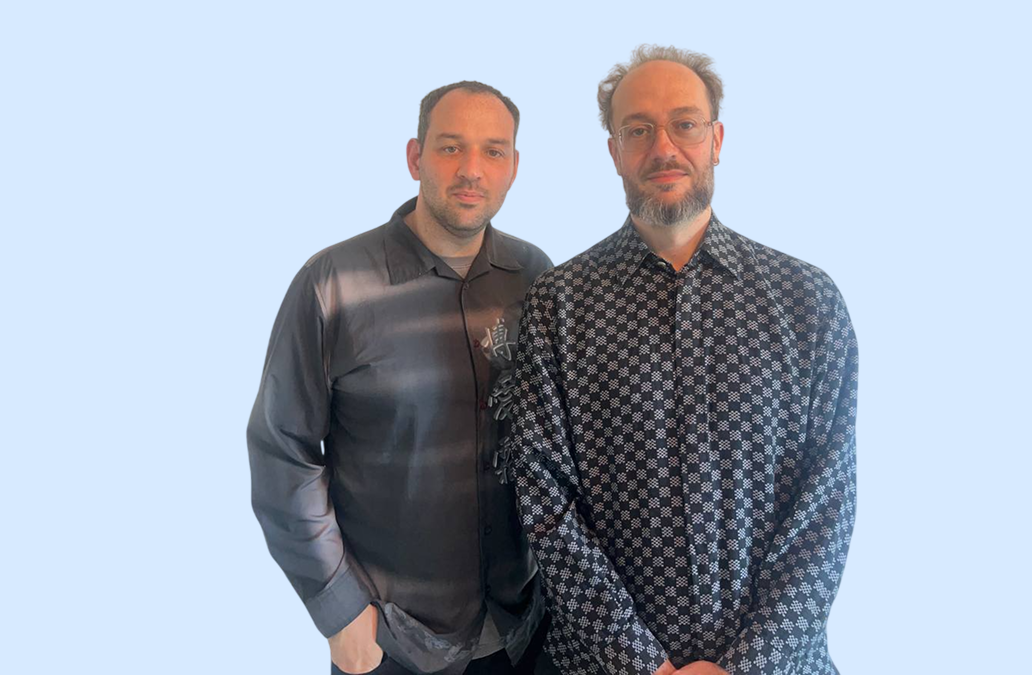
Diego Agullo is a philosopher, writer, artist, and senior Tai Chi teacher. Harri Kraievets is a analytical psychologist and artist. United by a shared passion for human transformation, they have combined their knowledge and experience to create Picnic with Doppelgänger.
With more than 15 years of continuous research and practice in both the artistic and therapeutic worlds, Diego and Harri bring together philosophy, creativity, embodied practice, and psychotherapy into a unique hybrid approach.
Their collaboration offers participants a rich and balanced space that integrates deep self-inquiry with playful artistic exploration.
DANCING THE PROBLEM
Diego has been researching the relationship between dance and problem since 2013. The core idea is simple: dance is not the result of the dancer’s intention, but the outcome of encountering a problem — something thrown at you that demands a response.
This research is part of what Diego brings into the laboratory. His practice adds a somatic dimension to the process — grounding the work not only in reflection and film, but in the body itself. Through movement, participants encounter their patterns from a different angle: not by thinking about them, but by feeling how they live in the body.
If this interests you, you can find out more about Diego’s practice below.
Lacanian approach in oure Labaratory
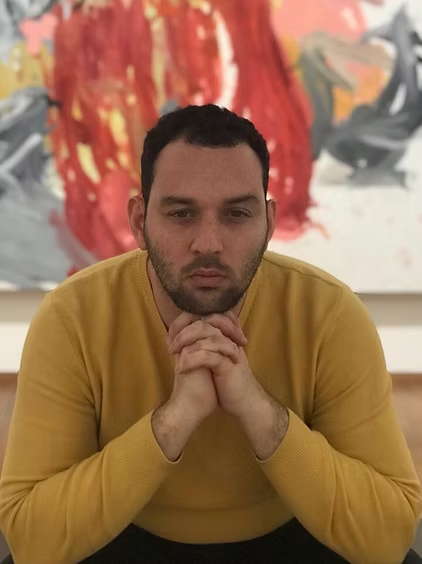
Harri Kraievets
“As a Lacanian analyst, what matters to me is not solving the problem — but creating the conditions in which you can finally hear what it is telling you.”
Harri creates conditions in which a person can encounter their own patterns differently — by listening to how they speak, how they repeat, and how they position themselves in relation to the Other. A fixed identity becomes something more open, where new relations to oneself can begin to emerge.
For Who and Why?
This laboratory is for anyone who senses that something in their life keeps repeating — in how they work, relate, create, or stop themselves just before something becomes possible.
You might recognize yourself here→
One step away
1
You have always been one step away from the breakthrough — but something pulls you back at the last moment, and you don’t know what it is.
Something is missing
2
You feel like you’re missing something essential, but you can’t name it. A direction, a clarity, a permission to move.
The question keeps returning
3
You don’t yet know who you want to become or what you want to do — and you’re tired of waiting for the answer to arrive on its own.
Familiar but stuck
4
You have always been one step away from the breakthrough — but something pulls you back at the last moment, and you don’t know what it is.
Ready for something new
5
You are drawn to self-knowledge but therapy alone hasn’t given you the full picture. Or you’ve never tried either therapy or art, and something in you is ready.
A different kind of mirror
6
You want to see yourself from the outside — not through the eyes of others, but through your own.