
How the Laboratory Works?
The guiding hypothesis is simple but unsettling: what you call “your problem” may actually be a relationship you have not yet learned how to meet. Over two intensive weekends, participants move continuously between individual exploration and collective work, between introspection and encounter. Personal questions become shared investigations, revealing unexpected affinities between people who at first believed their struggles were unique.
Weekend One : Naming and Doubling
What actually happens when you walk through the door?
Over two intensive weekends, you will move through a structured process that combines individual exploration, group work, somatic practice, and filmmaking. Each phase builds on the previous one — from naming what is alive in you, to meeting it as a character, to shaping it into a film you can watch and keep.
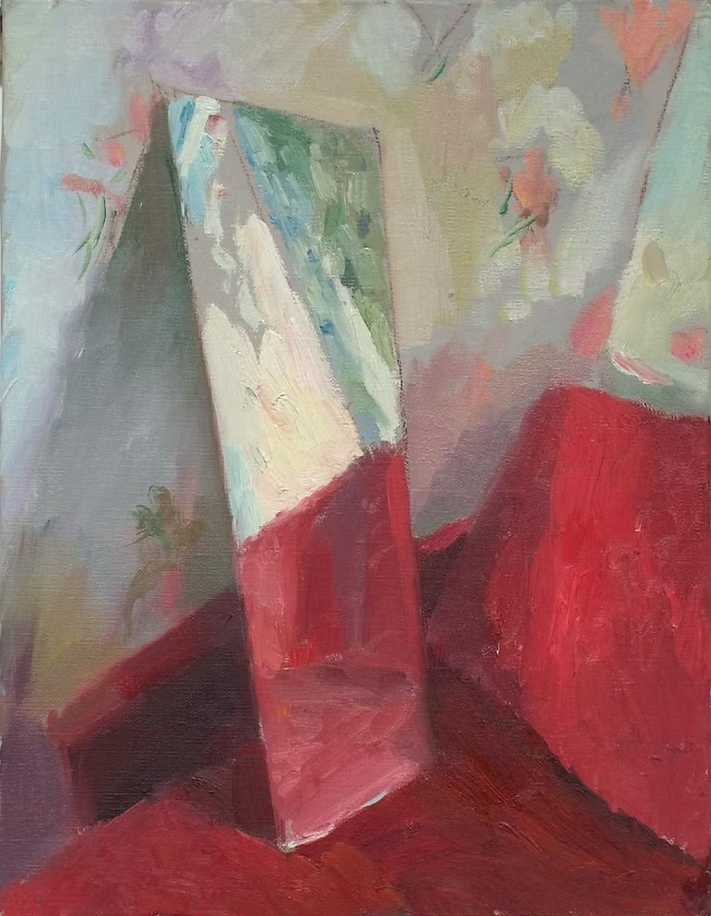
The First Mirror
You begin by identifying what is currently shaping your life. Not a general theme — but a specific tension, question, or recurring pattern that keeps returning. Through guided exercises you will sit with questions such as:
What kind of problem or ache is currently present in my life?
Which transformation do I seek?
Who am I becoming through this pattern?
Doubling the Self
Once your pattern is named, you begin to meet it as a character. You will create a video portrait of your “problematic self” — a version of you that embodies the pattern you wish to examine. Through video, writing, and performative exercises, you develop a relationship with this figure as if it were another person.
Working with Dreams
The laboratory also uses dreams as material. Through guided exercises you will work with your own dreams as symbolic narratives — entry points into hidden structures of desire, fear, and repetition that are difficult to access through rational reflection alone.
The Crisis Point
At a certain moment in the process — deliberately — the ground shifts. Familiar definitions of identity stop working. You may not know exactly who you are, what you want, or which version of yourself is speaking.
This is not considered a problem. It is considered the most productive moment of the laboratory. It is where something new becomes possible.
Weekend Two : Articulation and Film
Shaping the Material
From crisis emerges clarity. In the second weekend you begin shaping everything generated in the process — videos, texts, conversations, performances — into a form that feels true to your inquiry. Through editing and decision-making you identify what belongs and what doesn’t.
The guiding principle: you are as many selves as the practices you embody.
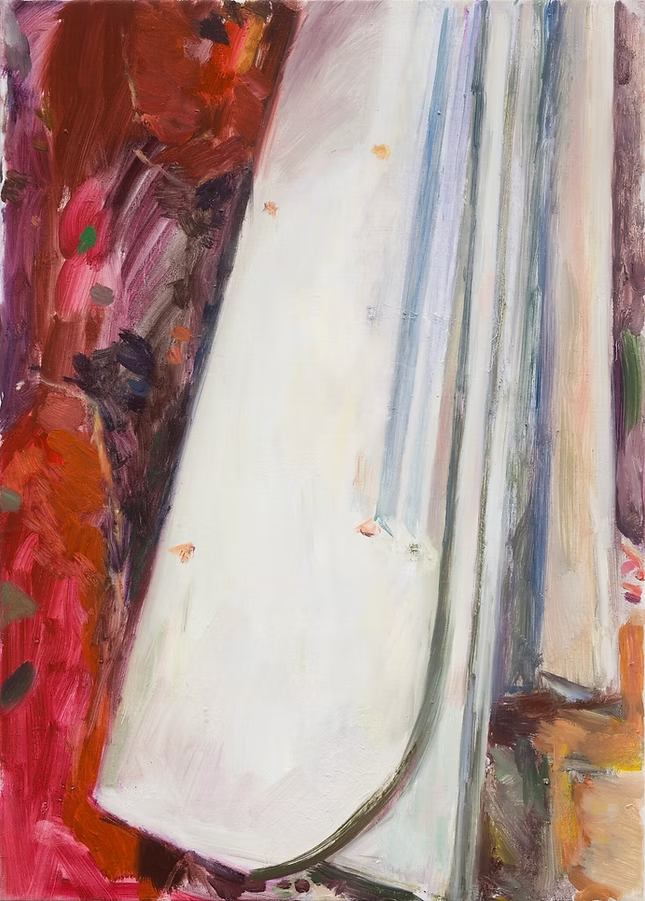
The Film
Video is the central format of the laboratory because it can hold everything — movement, dialogue, performance, visual experimentation — while allowing you to observe yourself from the outside. You will leave with a short biographical film about yourself: a document of your process that you can watch, share, and return to.
This film is not just a result. It is a tool for transformation. By giving your pattern a visible form, you are able to see it from the outside — as something that can be observed, questioned, and reinterpreted. What once felt fixed or overwhelming becomes a relationship that can shift.
The Collective Screening
The laboratory closes with a collective screening and reflection. The group watches each film together and acts as a mirror — helping each participant recognize what has appeared through the process, what has shifted, and what directions may now be opening.
A Tool for Transformation
The film that emerges from this process is not just a result — it is a tool for transformation. By giving your pattern a visible form, you are able to see it from the outside: as something that can be observed, questioned, and reinterpreted rather than simply experienced.
What once felt fixed or overwhelming becomes a relationship that can shift. Watching yourself, repeating, reframing, and sharing this material within the group creates distance — but also recognition. A moment where identification loosens and something new becomes possible. The film becomes a space where you can try out other positions, other voices, other versions of yourself — and begin to relate differently to what once felt inevitable.